Platelet – Rich Plasma (PRP)
Stimulate Tissues. Accelerates Healing.
Hair loss can be a frustrating experience, but several innovative treatments are available to help manage and reverse it. One such treatment that has been gaining attention in recent years is Platelet-Rich Plasma (PRP) therapy. This procedure uses your body’s own blood to promote hair growth and improve the overall health of your hair follicles. Let’s take a closer look at how PRP works, its benefits, and what you can expect from the treatment.
What is PRP?
Platelet-Rich Plasma (PRP) therapy involves using a concentrated form of your own blood, which is rich in platelets and growth factors that are naturally involved in tissue repair and healing. The process begins with a simple blood draw, after which the blood is placed into a machine called a centrifuge. The centrifuge spins the blood at high speeds, separating the platelets from other blood components and resulting in a concentrated plasma solution.
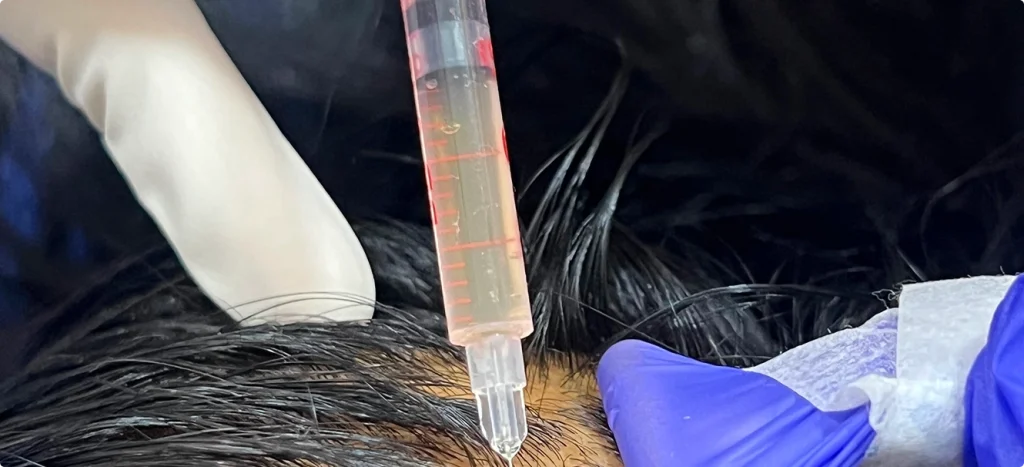
This platelet-rich plasma is then injected into the scalp, specifically targeting areas where hair is thinning or lost. The growth factors in the PRP are believed to stimulate hair follicles, promote new hair growth, and improve the overall density of the hair.
How does PRP work for Hair Loss?
PRP works by utilizing the growth factors found in platelets to promote healing and rejuvenation. When injected into the scalp, PRP is thought to:
- Stimulate Hair Follicles:The growth factors encourage dormant or miniaturized hair follicles to become active again, leading to hair regrowth.
- Increase Blood Flow to the Scalp:The growth factors can improve scalp circulation, providing hair follicles with the nutrients they need to thrive.
- Strengthen Existing Hair:PRP can help strengthen existing hair strands, reducing hair breakage and promoting healthier hair overall.
- Reduce Inflammation:By reducing inflammation in the scalp, PRP therapy helps create a healthier environment for hair follicles to grow.
Benefits of PRP for Hair Loss
There are several reasons why PRP has become a popular option for treating hair loss:
- Non-surgical:PRP is a minimally invasive procedure that does not require any incisions or sutures. There is little to no downtime, and patients can return to their regular activities right away.
- Natural Treatment:Because PRP uses your body’s own blood, the risk of allergic reactions or side effects is minimal.
- Effective for Various Types of Hair Loss:PRP has shown positive results in treating a variety of hair loss conditions, including androgenetic alopecia (common male and female pattern baldness), telogen effluvium (temporary hair shedding), and alopecia areata (patchy hair loss).
- Improves Hair Thickness and Volume:Many patients see improvements in hair thickness and overall volume after a few PRP treatments.
What to Expect During the PRP Procedure?
The PRP procedure is relatively straightforward and typically takes about 60 to 90 minutes. Here’s what you can expect:
- Blood Draw:A small amount of blood will be taken from your arm, similar to a routine blood test.
- Processing the Blood:The blood is placed in a centrifuge to separate the platelets from the rest of the blood components. This process takes about 10-15 minutes.
- Scalp Injections:Once the PRP is ready, it will be injected into the areas of the scalp where hair loss is most prominent. The injections are relatively quick, but some patients may experience mild discomfort during the procedure. Numbing agents can be applied to minimise pain.
- Post-Treatment Care:You may experience mild redness or swelling in the treated area after the procedure. This typically subsides within a few hours. There is no significant downtime, so you can resume normal activities immediately. However, you should avoid washing or using hair products for the first 24 hours.
How many PRP treatments are needed?
The number of PRP sessions needed depends on the individual and the extent of their hair loss. Typically, 3 to 4 sessions are recommended in the first few months, spaced about 4 to 6 weeks apart. After the initial series, maintenance sessions may be needed every 4 to 6 months to sustain hair growth.
Is PRP Right for You?
PRP therapy is an effective treatment for many people suffering from hair loss, but it is not suitable for everyone. It is most effective in individuals with early to moderate hair thinning stages, especially those with androgenetic alopecia. If the hair loss is too advanced or if there is complete baldness, PRP may not yield significant results.
Before considering PRP, it is important to consult with a dermatologist or a hair restoration specialist to determine whether you are a good candidate for the treatment. They will assess your overall health, the cause of your hair loss, and other factors to tailor a treatment plan that is right for you.
Conclusion
PRP therapy offers a promising, natural approach to treating hair loss. By harnessing the healing power of your own platelets, this treatment can stimulate hair growth, improve the thickness of existing hair, and restore confidence. While PRP is not a quick fix, many people begin to see noticeable improvements after several treatments. If you are struggling with hair loss, PRP may be the solution you’ve been looking for to help regain fuller, healthier hair.
If you have any questions or are considering PRP therapy, don’t hesitate to schedule a consultation with a dermatologist to discuss your options and create a personalised treatment plan.
HAIR TREATMENT FAQ
Every skin is different, so the right treatment depends on your concern, skin type, and goals. At Helios, we always begin with a consultation to understand your skin before suggesting anything.
Yes. Every patient undergoes a detailed consultation before any procedure. This ensures the treatment is safe, appropriate, and aligned with your medical history and long-term goals.
Most regenerative and medical treatments work gradually. Visible improvement may begin in a few weeks, while optimal results develop over months. Sustainable outcomes require consistency and follow-up.
All treatments at Helios are doctor-supervised, protocol-based, and performed in a sterile clinical setting. Safety and suitability are prioritised before every procedure.
Yes. We treat hair and skin concerns in both men and women, across different age groups.
Yes. We treat hair and skin concerns in both men and women, across different age groups.