PROFESSIONAL NOSE PIERCING
Nose piercings, in our deep-routed Indian culture, are not just a mere fashion statement and something that enhances your beauty. In our culture, it symbolises divinity, femininity and fierceness in women. It roots in deep spiritual and traditional wellness, often walking you through significant milestones from womanhood to marriage and motherhood, and aligns with ayurvedic beliefs regarding reproductive health and accupressure points.
Hence, to incorporate such deep personal and cultural value, it’s also mandatory who you trust to perform the procedure and where you choose to get it done. Whether the nose ring you choose adapts to your new lifestyle alongside giving respect to your traditions like a simple ring or a stone stud or is a classic tribute like a mookuthi, we guide you in this journey of becoming a new “you”.
And just as significant as the start is, the aftercare is equally important, as a small infection in the nose can lead to a major operation. Which is why professional helping hands do a lot in this process. At Helios, we believe the importance of aftercare is just as significant as the piercing procedure. We also make sure of the comfortability, hygiene, and carefully performed piercing procedure. We also extend our eyes on the appropriate placement, attention to skin health, and clear aftercare guidance to help in curing the new piercing.
The first few days adapting to the new piercing might be a little difficult, which is why we guide you through it.
Doubt much? Go ahead and give us a chance by booking a consultation!
NOSE PIERCING – MEANING & PROCEDURE GUIDE:
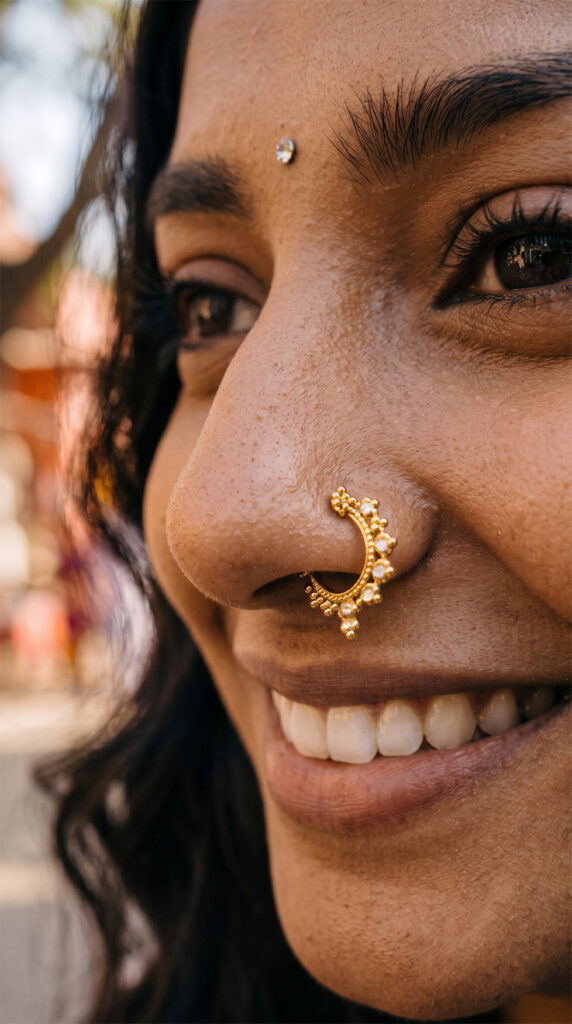
Nose piercing, as a procedure, is creating a small opening in the nose to aid a small piece of jewellery, such as a stud or a ring. Commonly looked up as a culture representation, tradition or simply as an aesthetic.
The piercing location and technique depend on your preference, anatomy and clinical suitability. A professional nose piercing is a small procedure using a sterile single-use needle, followed by a 3-6 month healing process with daily regular sterile saline care. It assesses an appropriate position and placement while also considering health and hygiene.
TYPES OF NOSE PIERCING:
The style of the jewellery depends on personal choice, style, comfort and preferred jewellery. But the differentiation is in the placement.
- NOSTRIL PIERCING: The most preferred style and the placement of the stud/ring are on either side of the nose.
- NOSE STUD PIERCING: People going for a simple, subtle, everyday style and an understated look prefer these. The jewellery made from a suitable material and appropriate style for the piercing really pulls this look together.
- NOSE RING PIERCING: A nose ring is a fierce and powerful look that’s pulled off by good piercing techniques and a healing process. The look serves a more noticeable style, and though it’s tough maintaining this piercing, a proper hygiene routine and a good-quality material ring help achieve the look.
PROCEDURE:
A proper nose piercing process begins with a complete discussion of your preferences and an assessment of intended piercing style. To ease your nervousness regarding your piercing, here’s a breakdown.
- Consultation and skin assessment: Your consultant analyses your skin type, checks for any active nasal infections or keloid tendencies, and discusses your aesthetic preferences.
- Anatomical Marking: The piercing site is carefully marked taking considerate of your natural nostril crease and chosen jewellery style. (stud/hoop)
- Numbing: A medical numbing agent is applied 15-20 minutes prior to the piercing start so you feel light pressure and nothing more during the procedure.
- Sterile piercing execution: Based on your tissue thickness, the doctor uses a sterile, single-use medical device or hollow needle to create a clean channel and secures the hole with your preferred hypoallergenic jewel.
- Guided Aftercare: The consultant prepares you and gives you instruction and guidance for rapid skin healing that's particularly personalised to adapt to your lifestyle.
HEALING AND AFTERCARE IN PROFESSIONAL PIERCING:
As the nasal tissue remarkably notes lesser blood circulation than of an earlobe, it requires disciplined care to heal better without skin bumps known as granulomas or an infection that might lead to taking your piercing off or a major issue.
- Healing timeline: Initial surface healing requires about 4-6 weeks, while complete tissue maturation takes around 2-3 months.
- Isotonic Saline Cleansing: Cleanse the site twice regularly with a sterile 0.9% sodium chloride (saline) solution. Avoid harsh alcohol, hydrogen peroxide, or heavy ointment, which would damage newly forming skin cells and trap bacteria.
- Do Not Twist or Rotate: Modern dermatology strictly stands against twisting new jewellery, as it causes tearing delicate healing tissues and introduces bacteria through your hands.
- Keep irritants away: avoid heavy makeup, facial oils or active skincare acids like retinoids or AHAs near the nostril until the channel has fully recovered and healed.
Frequently Asked Questions
You can contact Helios Skin Clinic to enquire about nose piercing services at its Alwarpet and Pallavaram centres in Chennai. Confirm service availability and appointment details with the clinic before visiting.
Nose piercing involves creating a small opening at the selected location and placing suitable jewellery. The procedure should be performed using appropriate hygiene protocols and suitable equipment by a trained professional.
Healing varies from person to person. A nostril piercing can take several months to heal fully, so it is important to follow aftercare instructions and avoid changing the jewellery too early.
Some brief pain or discomfort is common. The intensity varies depending on individual sensitivity and the piercing location.
Clean it gently with sterile saline wound-wash solution, following the instructions provided by your consultant professional. Avoid unnecessary touching, twisting, and harsh products around the piercing.
No. Changing jewellery too early can irritate the piercing and interfere with healing. Wait until the piercing has healed sufficiently and a qualified professional confirms that changing the jewellery is appropriate.
Possible complications include infection, irritation, bleeding, allergic reactions to jewellery, and scar or keloid formation in susceptible individuals. Appropriate hygiene and aftercare can help reduce some risks.
Increasing pain, spreading redness, significant swelling, pus, or fever may indicate a complication that requires medical assessment. Seek professional advice promptly and avoid removing the jewellery yourself if an infection is suspected.
People with sensitive skin may still be suitable candidates, but their skin history and any metal allergies should be discussed before the procedure. Appropriate jewellery selection and professional guidance are important.
Contact Helios Skin Clinic by phone at +91 99400 58215 or email info@heliosskinclinic.com to enquire about availability and book an appointment.